
Difficulty Defining User Needs
Teams often struggle to articulate user needs clearly. Many organisations are so feature-driven or internally focused that “user needs” becomes a vague, inconsistent concept. If organisations don’t get this step right, the rest of the map drifts.
What This Challenge Looks Like
Teams write needs as features (“We need Single Sign-On”)
Every stakeholder becomes “a user,” diluting clarity
People fixate on tasks rather than outcomes
Strong personalities push their interpretations of the user
Emotional / social context is dismissed as “soft”
Why It Happens During UNM Adoption
Habitual inside-out thinking dominates
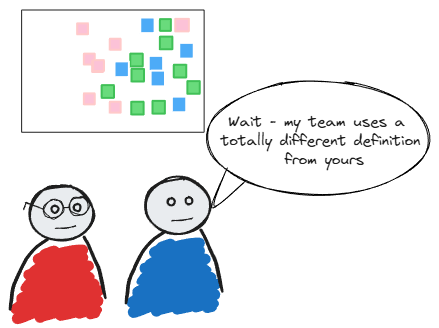
Lack of shared definition of “user need”
Different teams frame needs differently
Customer evidence is inconsistent or siloed
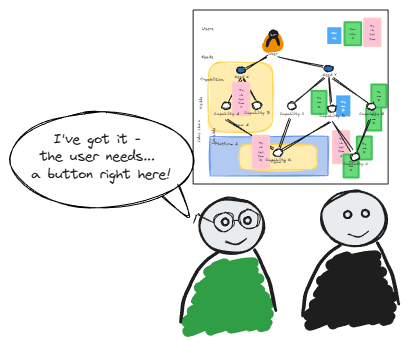
Teams leap straight into solution mode
How to Move Past It
Use simple outcome templates (When I… I want to… So that…)
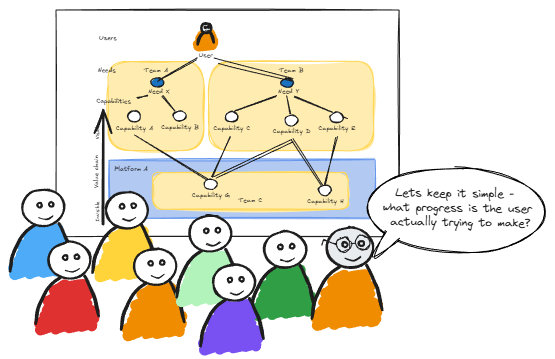
Anchor the discussion in progress, not features
Limit early sessions to one clearly defined user
Use example walkthroughs (e.g. the moviegoer) to calibrate thinking
Bring in customer-facing roles for richer context
Practical Tips
Use Verbs: Focus on actions users are trying to achieve. Verbs help keep needs actionable and outcome-focused.
Test Clarity: Ask, “Would a user recognise this as their need?” If not, refine the language.
Avoid Solutions: Keep needs focused on the problem, not the implementation.
UNM begins with clarity of need. If teams learn this one skill, everything downstream becomes easier.
Strategies to Define User Needs
Use User-Centric Language
Focus on framing user needs as the outcome the user is trying to achieve or the progress they are trying to make. Avoid describing solutions or systems directly. For example:
Poor: “Ticket purchase system” - describes an underlying system
Better: “Buy a ticket” - describes the action the user wants to do
Best: “Get valid access to travel to a destination” - describes the outcome the user wants
Often when you ask users what they want, they will describe the solution rather than the need and it can be tricky to tease out the underlying need. However, it is the uncovering of the underlying need that begins to enable innovative thinking and creative solutions - does the user really need to buy a ticket to travel - by what other means might they obtain valid access to travel?
Validate with Real Users
Where possible, engage directly with users to confirm that defined needs reflect their experiences and expectations. User interviews, surveys, or feedback sessions can provide invaluable insights. If you are looking to get started with ways to better engage with your users, I highly recommend taking a look at Continuous Discovery Habits by Teresa Torres.
Collaborate Cross-Functionally
Involve team members from diverse functions, such as customer support, product management and marketing. This ensures a well-rounded perspective on user needs and reduces blind spots.