
Lack of Clarity Around Capabilities
Teams often struggle to map capabilities to user needs, particularly when there is a lack of understanding about existing systems, processes, or tools. This can lead to incomplete maps or missed opportunities to address critical gaps. Capability literacy is a common early sticking point.
What This Challenge Looks Like
Capabilities phrased as “Dataplatform Team” or “Backend API”
Capabilities defined as job titles (“Marketing”)
Every capability becomes a technical component
Teams disagree on what a capability is
People can’t tell where a capability begins or ends
Why It Happens During UNM Adoption
No shared vocabulary around capabilities
Organisations used to system-centric or team-centric planning
Capability-thinking feels “architectural” and intimidating
Capabilities are emergent — and emergence feels uncomfortable
Teams lack a simple heuristic for defining capability boundaries
How to Move Past It
Use verb-based naming (“Manage Payments,” “Verify Identity”)
Ask: “What must the organisation enable to meet this need?”
Treat capabilities as abilities, not structures
Allow rough capability placeholders early in the map
Use examples (e.g. moviegoer) to normalise the process
Practical Tips
Use Simple Terms: Avoid jargon when describing capabilities to ensure alignment across teams.
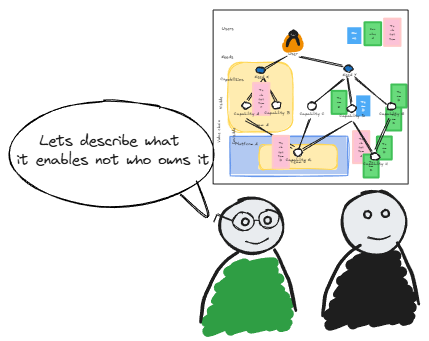
Focus on Functionality: Map what a capability enables, not how it works.
Iterate and Refine: Update your maps as new capabilities are developed or identified.
Capability clarity develops over time. Give teams permission to start imperfectly — and refine through use.
Safe-to-Try Interventions
Audit Existing Capabilities
Conduct an inventory of current systems, tools, and processes. Understand what is already in place and how it supports user needs.
Engage Domain Experts
Collaborate with subject matter experts who understand specific capabilities and their dependencies. This ensures a comprehensive and accurate map.
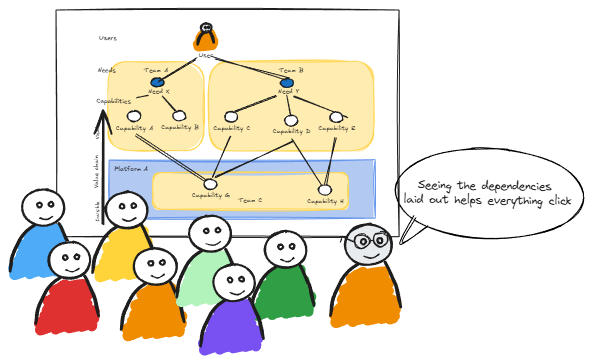
Visualise Dependencies
Create diagrams or dependency trees to illustrate how capabilities relate to one another and to user needs. Visuals can reveal hidden gaps or bottlenecks.