
Misaligned Team Ownership
When organisations first create a User Needs Map, they often discover messy, uncomfortable truths about unclear ownership or misaligned boundaries. The challenge isn’t the insight — it’s knowing how to handle it safely. Teams need confidence in how to act on what the map reveals.
What This Challenge Looks Like
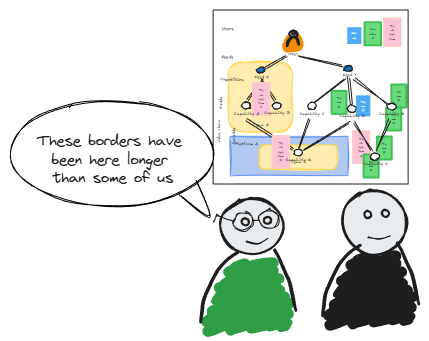
Teams panic when overlaps or gaps become visible
People feel threatened by potential boundary changes
Leaders ask for “the correct structure” too early
Participants jump straight to reorgs instead of small moves
Ownership discussions become political rather than practical
Why It Happens During UNM Adoption
Ownership has been implicit for years
Boundaries are historical accidents, not intentional design
Teams worry about losing autonomy, identity, or headcount
No shared language around team interactions
Leaders fear destabilising delivery
How to Move Past It
Reinforce: UNM is not a reorg tool — it's a clarity tool
Focus on interface clarity before boundary changes
Introduce Team Topologies interaction modes to depersonalise
Use small, safe-to-try adjustments (not wholesale redesigns)
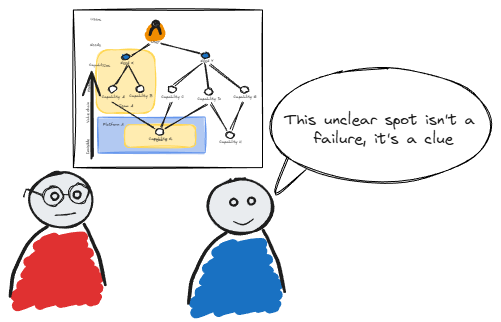
Highlight capabilities with unclear ownership as “learning areas” not failures
Practical Tips
Start Small: Begin with one team or value stream to test and refine realignment efforts.
Clarify Ownership: Ensure each capability and user need has a clearly defined owner.
Iterate: Treat team alignment as an ongoing process, adjusting as priorities or needs evolve.
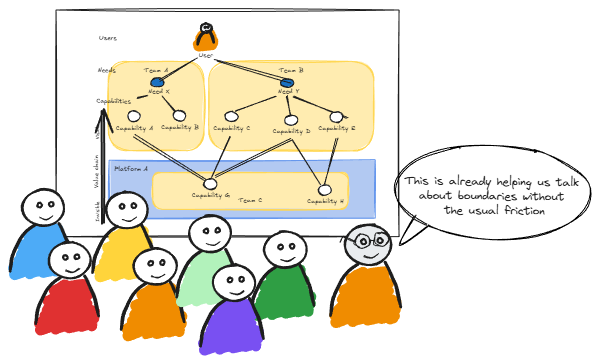
Ownership conversations get easier when the map becomes the shared reference point — not individual opinion or politics.
Safe-to-Try Interventions
Overlay Current Teams
Map your existing team responsibilities onto the user needs map. This will help identify overlaps, gaps, or misalignments between team ownership and key capabilities.
Use Team Topologies Principles
Apply concepts like stream-aligned teams, enabling teams, and platform teams to realign structures. This approach ensures teams are optimised for fast flow and manageable cognitive load.
Engage Leadership
Involve leadership early to secure buy-in and ensure restructuring decisions are communicated clearly to all stakeholders. This prevents resistance and helps teams understand the rationale behind changes.