
Overwhelming Complexity
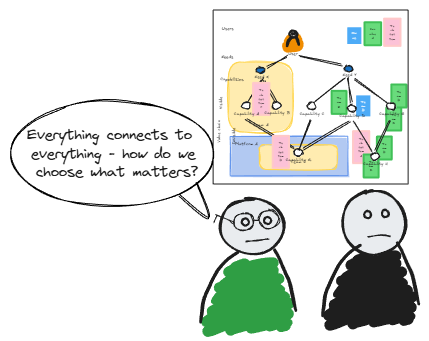
When organisations first try UNM, many underestimate how overwhelming it can feel to map their entire domain. Complexity becomes a blocker — teams aren’t sure where to begin, how deep to go, or how to decide what’s “enough.” This challenge can stop UNM adoption before it starts.
What This Challenge Looks Like
Teams try to map the entire organisation in one go
Participants get lost in detail and debate
People argue about system accuracy instead of insights
Sessions stall because “we need more context first”
Facilitators get pulled into architectural rabbit holes
Why It Happens During UNM Adoption
Teams are unfamiliar with sensemaking tools
Fear of missing detail leads to over-mapping
Organisations mistake completeness for clarity
Too many domains pulled into one session
Legacy systems complicate mental models
How to Move Past It
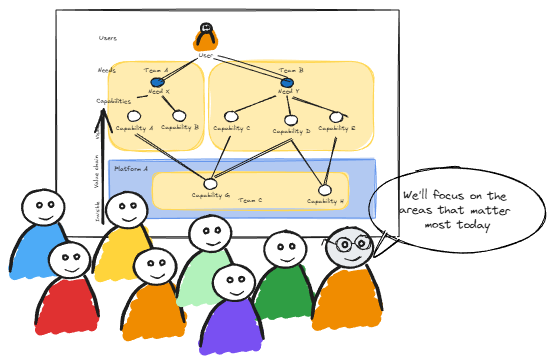
Start with one user, one need, one slice
Use timeboxing aggressively (15 minutes per layer)
Label unknowns instead of resolving them
Reinforce “useful, not perfect” as a principle
Build the map over 2–3 short sessions, not one long one
Practical Tips
Use Layers: Start with a simple map and add complexity in stages as needed.
Set Boundaries: Clearly define the scope of each mapping session to avoid unnecessary sprawl.
Engage Smaller Groups: Work with focused groups of stakeholders to manage discussions effectively.
UNM is iterative by design. Complexity becomes manageable when teams learn to map in slices.
Safe-to-Try Interventions
Break It Down
Focus on one user group or a specific area of the business at a time. Create smaller, targeted maps that address specific needs rather than attempting to map the entire organisation at once.
Prioritise Critical Needs
Identify the most critical user needs and capabilities that have the greatest impact on value delivery. Address these areas first to ensure progress is made where it matters most.
Iterate
Treat User Needs Mapping as a continuous process. Begin with a high-level overview and refine it over multiple sessions as new insights emerge.