
Align your teams around what really matters
When smart teams still pull in different directions, the issue isn’t effort — it’s clarity. User Needs Mapping helps you see how user needs connect to work, teams, and flow — so everyone can move with purpose.
Most organisations optimise for their internal structures — their functions, systems, roadmaps, and metrics. That inside-out focus keeps teams busy but often disconnects effort from outcomes. Priorities fragment, dependencies multiply, and the “why” behind the work erodes.
User Needs Mapping (UNM) turns this thinking outside-in. It starts with what users are trying to achieve, then works inward to see how value actually flows — and where it gets stuck. The result is shared situational awareness that turns activity into outcomes.
User Needs Mapping - an outside in approach
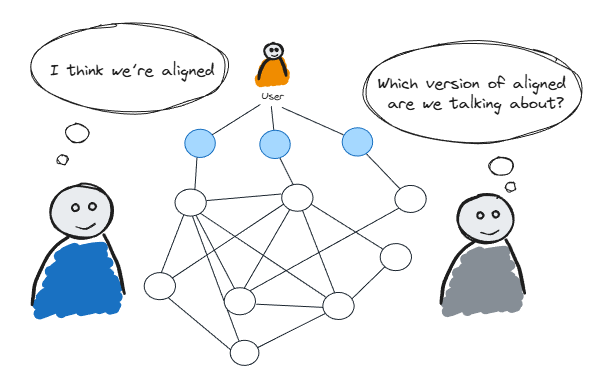
Predictable symptoms of inside-out drift
These aren’t people problems. They’re interaction and alignment problems. User Needs Mapping gives you a shared frame to address them.
Teams juggling too many priorities and burning out.
Cross-team dependencies and coordination overhead.
Unclear responsibilities and blurred team boundaries.
Features being delivered that don’t solve the real pain point.
The Chain of Influence
At the heart of User Needs Mapping is a simple but powerful progression:
The user experiences the needs.
The work reveals the required capabilities.
The needs shape the necessary work.
The capabilities determine the cognitive load.
The cognitive load informs the team boundaries and interactions.
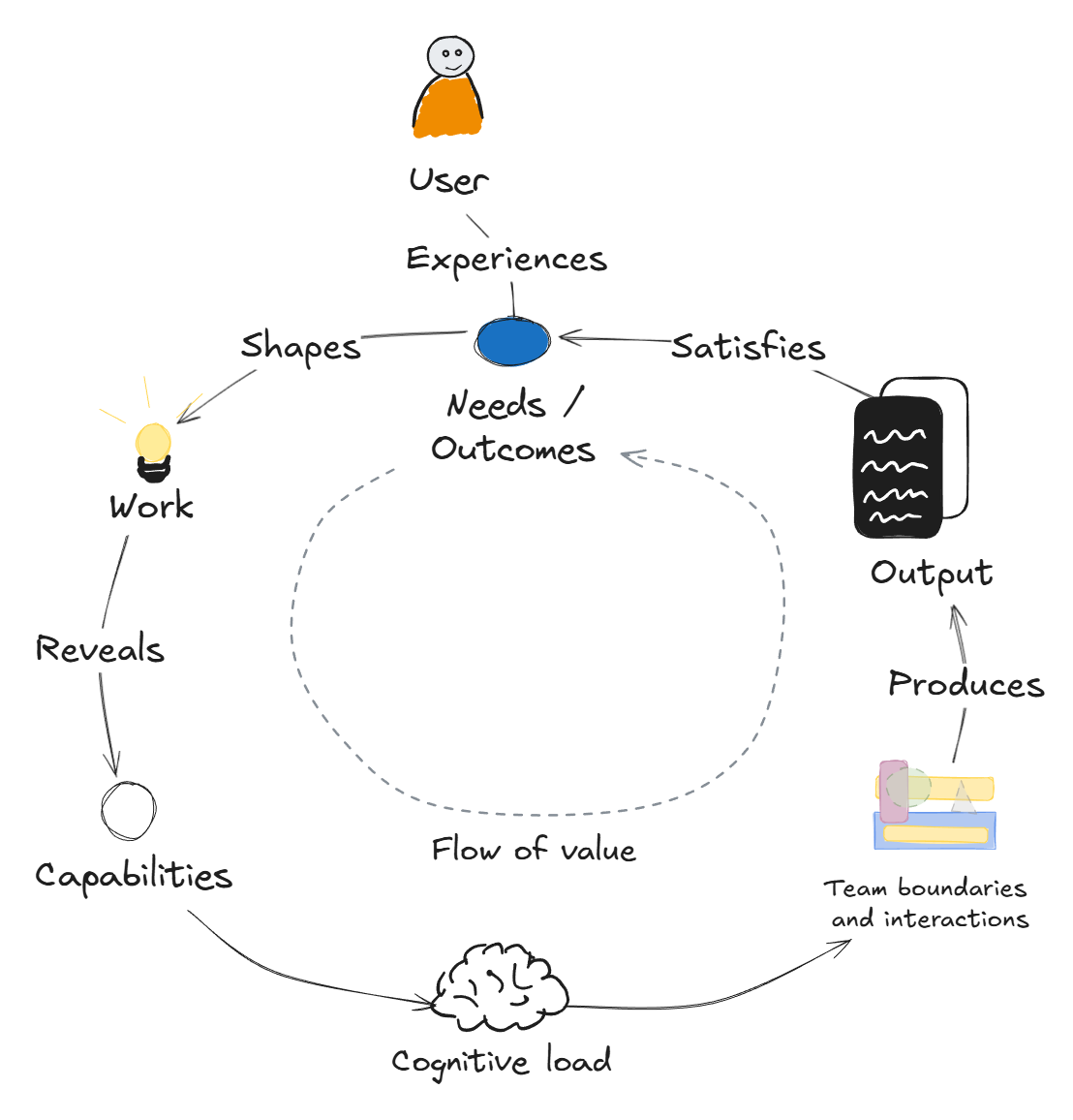
The team boundaries and interactions shape the flow of value.
When leaders can see this chain clearly, they can manage it deliberately. Decisions about structure, ownership, and priorities become evidence-based rather than political or reactive.
User Needs Mapping in practice
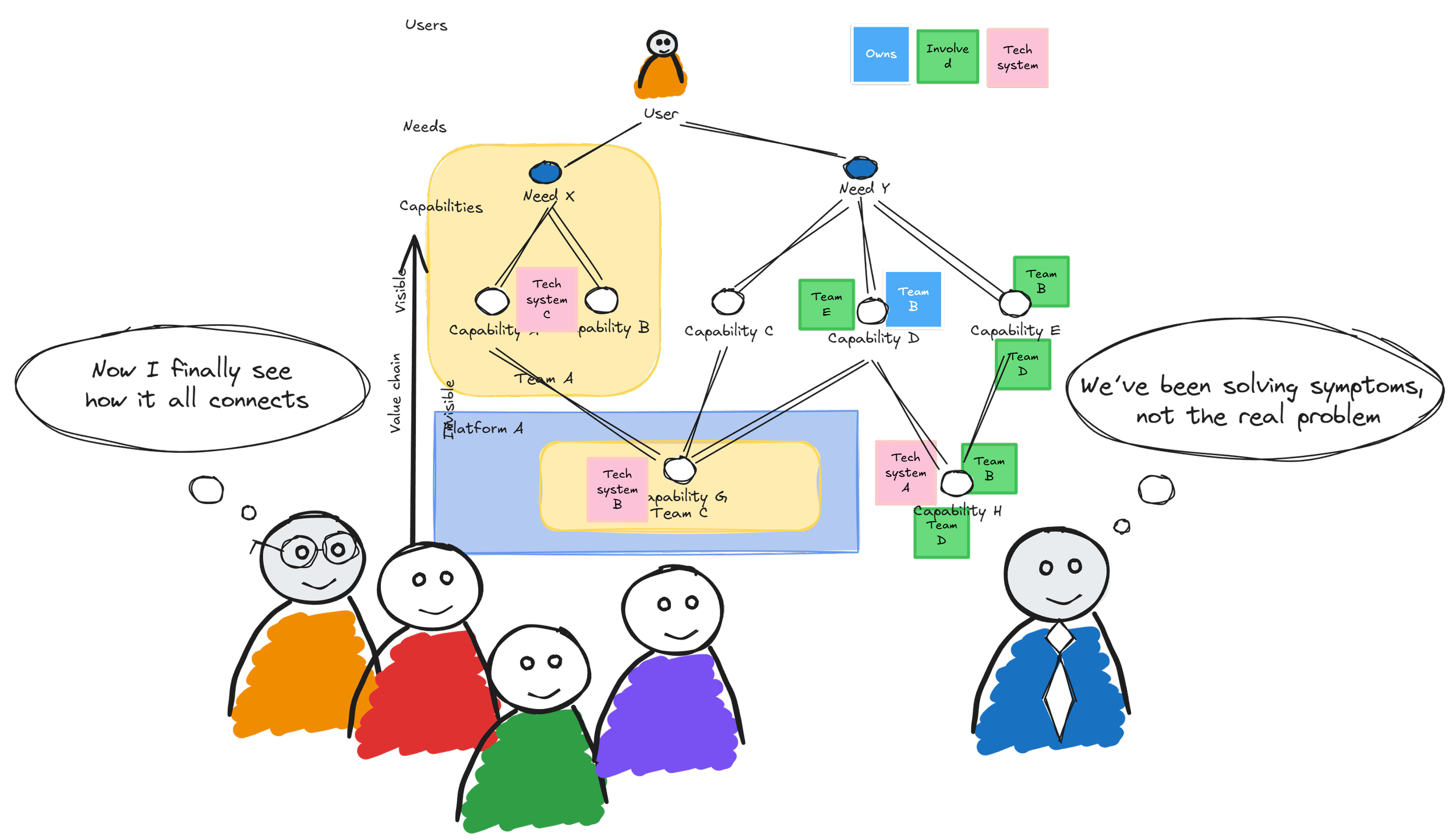
Make needs visible – express what users are trying to achieve as outcomes, not requests or tasks.
Map capabilities – identify the organisational capabilities that make those outcomes possible.
See load and friction – surface where cognitive load is too high, where dependencies block flow, and where handoffs slow things down.
Overlay teams and systems – reveal who owns what, where interactions help or hinder, and where responsibilities are missing or duplicated.
Shape next steps – co-create small, safe-to-try changes that improve flow without disrupting stability
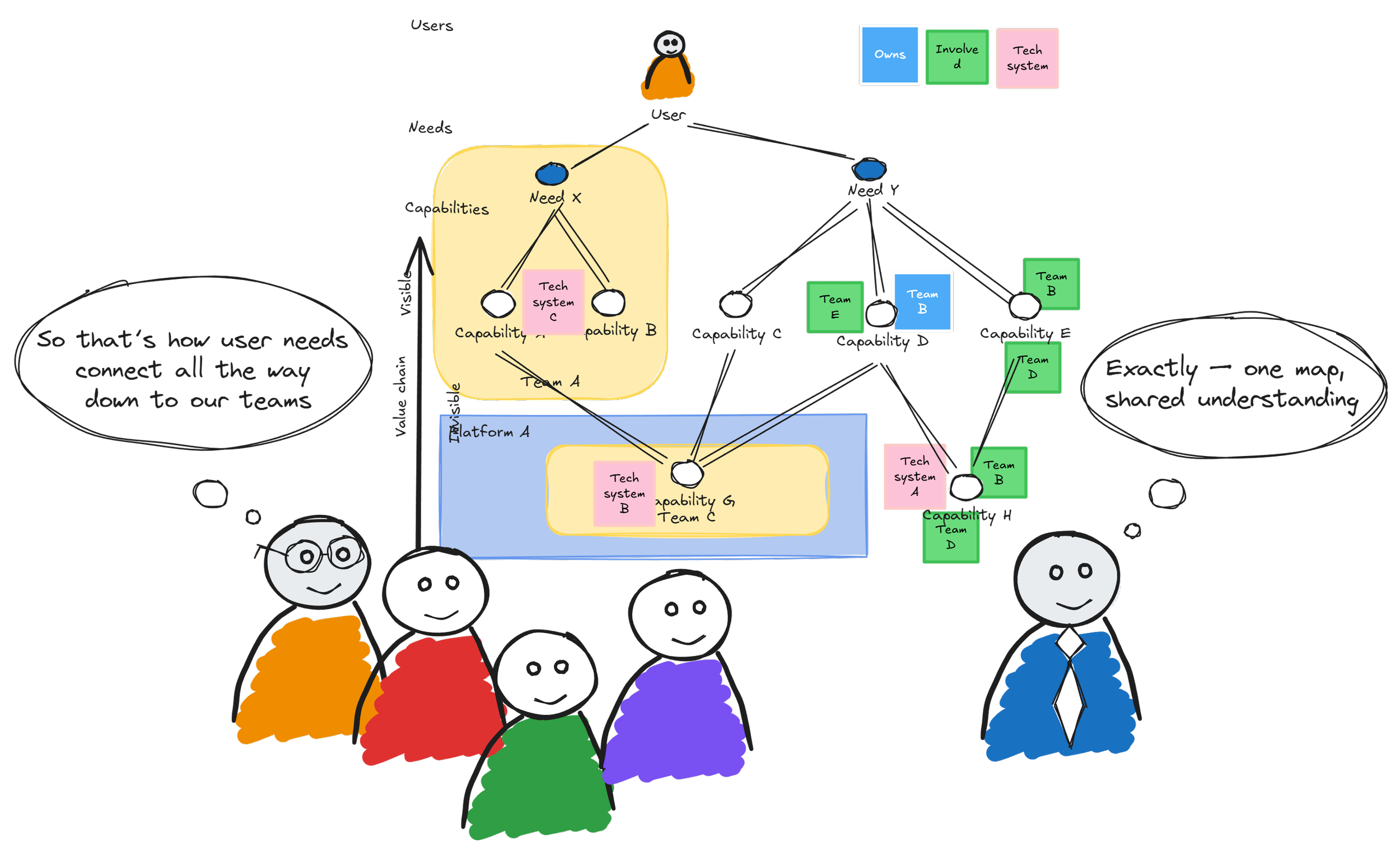
The result is a shared, visual understanding that links user needs to work, to capabilities, to teams — the full Chain of Influence.
From fragmentation to shared focus
User Needs Mapping isn’t a top-down planning tool. It’s a collaborative sense-making practice. Product leaders bring user goals, engineers bring constraints, and managers bring strategic intent. Together, they create a shared map that exposes overlaps, gaps, and hidden dependencies — and makes the path to improvement obvious.
When to use UNM
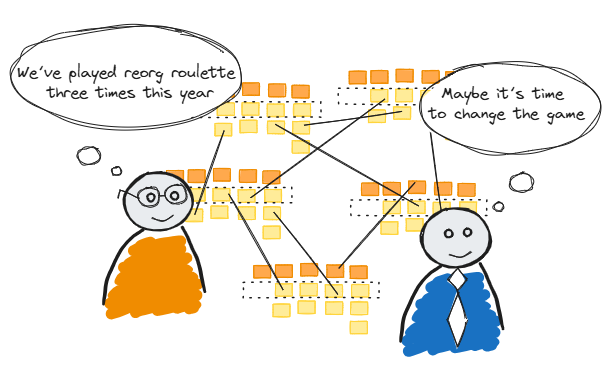
You’re scaling fast and want to avoid “reorg roulette.”
You see duplicated effort or unclear ownership across teams.
Dependencies and handoffs are slowing delivery.
Teams are busy, but outcomes aren’t improving.
You need a shared language to guide structural decisions.
What a UNM session produces
A clear visual linking users and needs → capabilities → teams and interactions.
Highlighted dependencies, ownership gaps, and cognitive load hotspots.
A prioritised set of flow-improving moves to address what matters most.
This becomes a living artefact for teams and leadership to align decisions as conditions evolve.
Connection to other approaches
User Needs Mapping complements and connects with established methods:
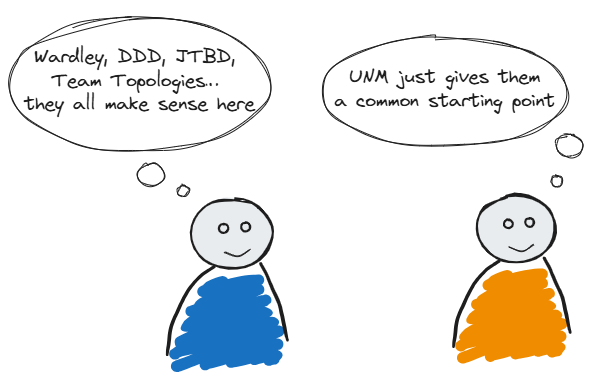
Domain-Driven Design (DDD) sharpens language, Jobs To Be Done (JTBD) clarifies outcomes; UNM unites them into one practical map managers can use to act.
Wardley Mapping gives you a view of your strategic landscape; UNM shows how your organisation is actually responding to user needs within it.
Team Topologies provides a vocabulary for team types and interactions; UNM shows where and why to evolve them.
Start with UNM to build shared clarity. Then deepen with these practices where needed.
A Real World example
As organisations grow, maintaining alignment and clear communication becomes increasingly difficult. For Passenger, a leading mobile ticketing provider, rapid expansion during the shift to contactless travel exposed the limits of their team structure. Information overload, blurred responsibilities, and growing coordination costs made delivery feel harder than it should.
Through User Needs Mapping, Passenger made the invisible visible. By starting with their users and mapping the capabilities required to meet their needs, the team uncovered where boundaries were unclear and where dependencies were slowing them down. The result was a clearer, more scalable team design—one that reduced friction, improved flow, and kept everyone connected to what really matters: serving passengers.

“User Needs Mapping gave us a completely new way to see how our teams connect to user outcomes. It revealed opportunities to organise more effectively and played a crucial role in how we applied Team Topologies at Passenger.”
Tom Quay, CEO, Passenger
Take the next step
If you’re ready to move from inside-out activity to outside-in alignment, User Needs Mapping will help you see your organisation differently, make better structural decisions, and unlock faster, more sustainable flow. Start by having a conversation about where your alignment challenges might be slowing you down — and how UNM can help.
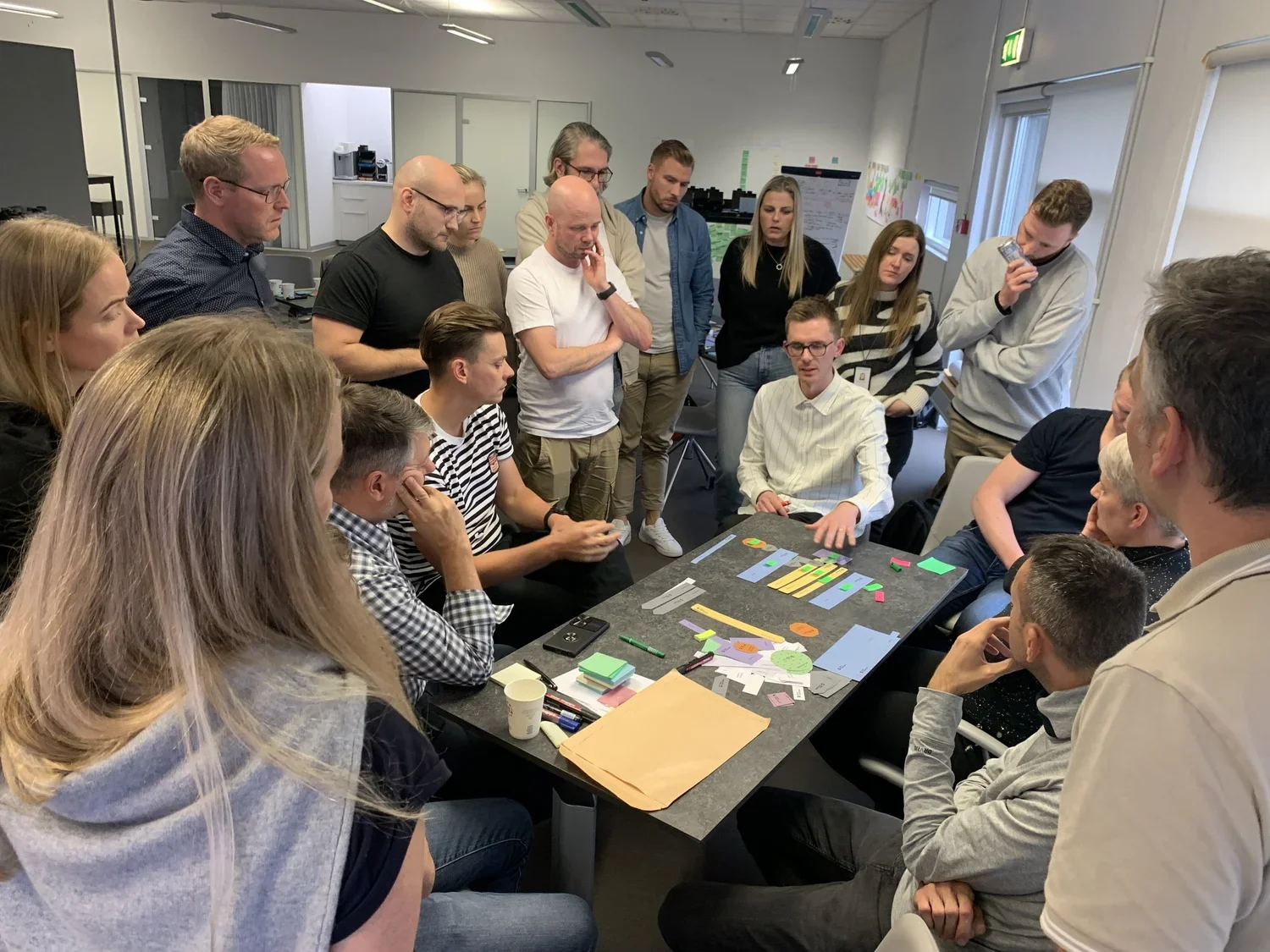
Get hands-on support applying UNM to your real context. Learn the technique, surface misalignment, and gain practical next steps your teams can act on immediately.

If you want expert guidance tailored to your organisation, explore how we can partner together to diagnose alignment challenges and evolve your team structures for fast, sustainable flow.
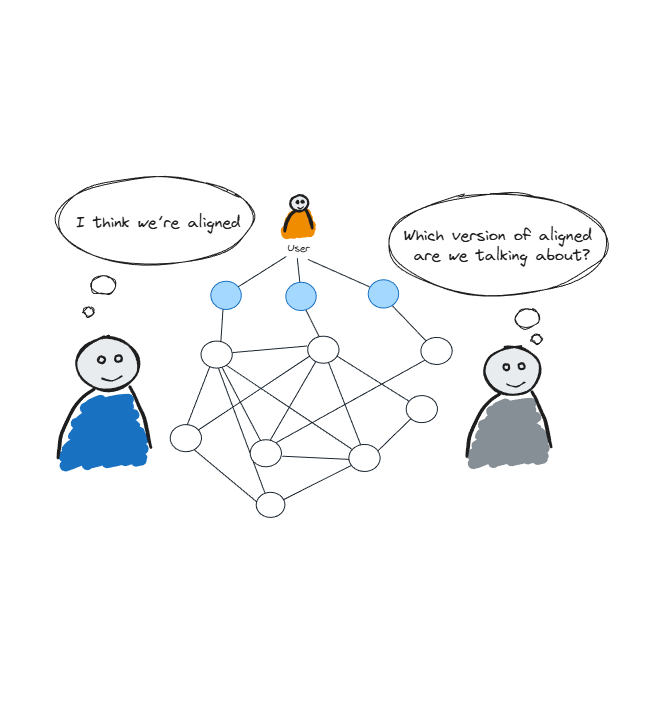
Explore a detailed walkthrough to understand how User Needs Mapping creates clarity, reveals friction, and supports better organisational design.