
Team Topologies
Team Topologies provides principles, patterns and practices for shaping team dynamics to optimise delivery speed and minimise cognitive load. These principles are key to creating effective team boundaries within any organisation.
Why Team Topologies?
Traditional team structures often create silos and inefficiencies, hindering value delivery. Team Topologies introduces a dynamic approach to team design based on two core principles:
Fast flow of change: Teams should be structured to deliver value quickly and with minimal friction.
Cognitive load optimisation: Team responsibilities must be manageable without overwhelming members.
By aligning teams with these principles, organisations can achieve better collaboration, clearer ownership, and faster delivery.
Key Concepts
The four fundamental team types
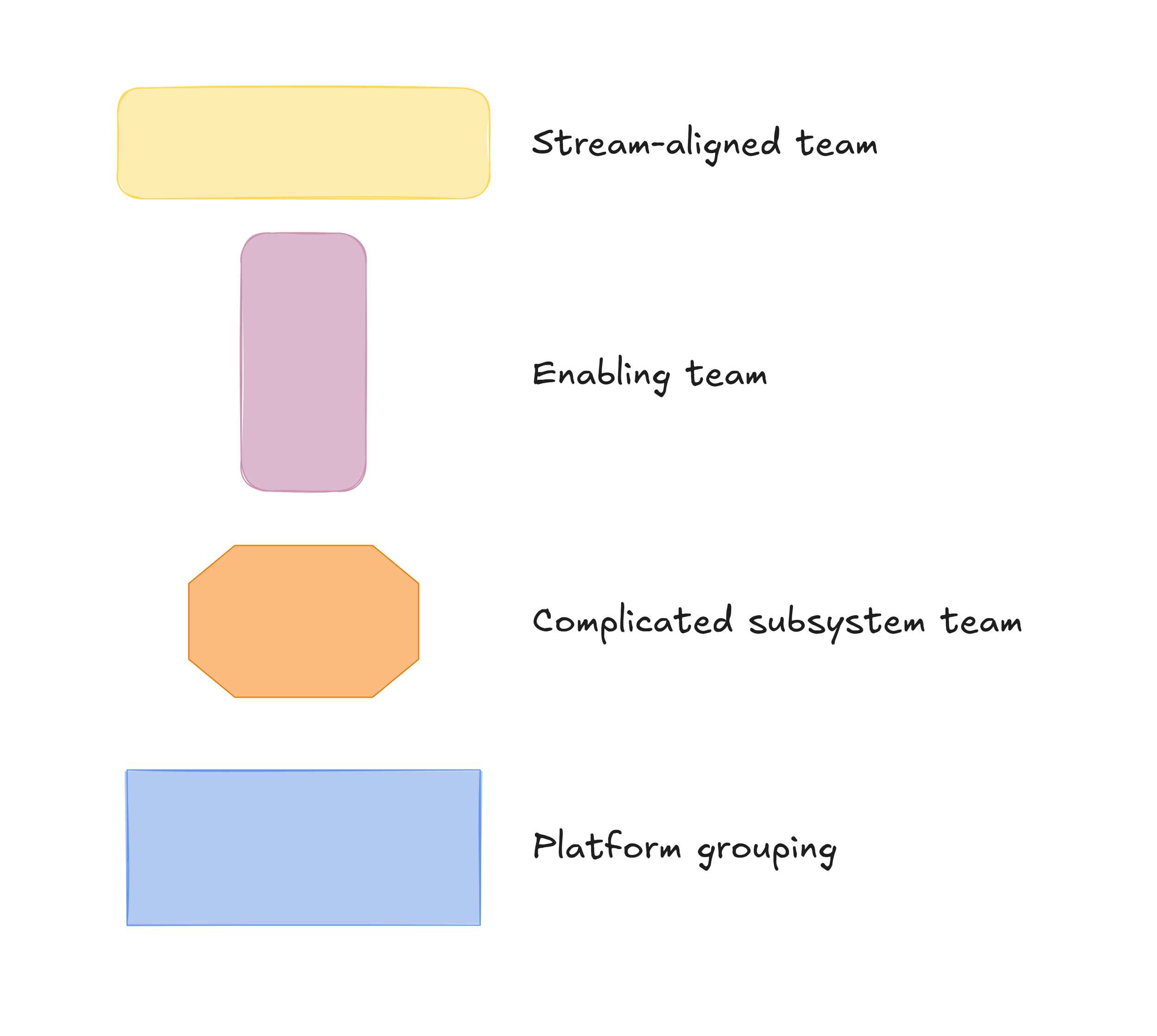
Stream-Aligned Teams: Deliver value directly to users or customers by focusing on a specific stream of work.
Enabling Teams: Support stream-aligned teams by providing expertise or removing obstacles.
Complicated Subsystem Teams: Manage areas of high technical complexity requiring specialised skills.
Platform (Teams) Grouping Build and maintain reusable services or systems that other teams rely on.
The three interaction modes
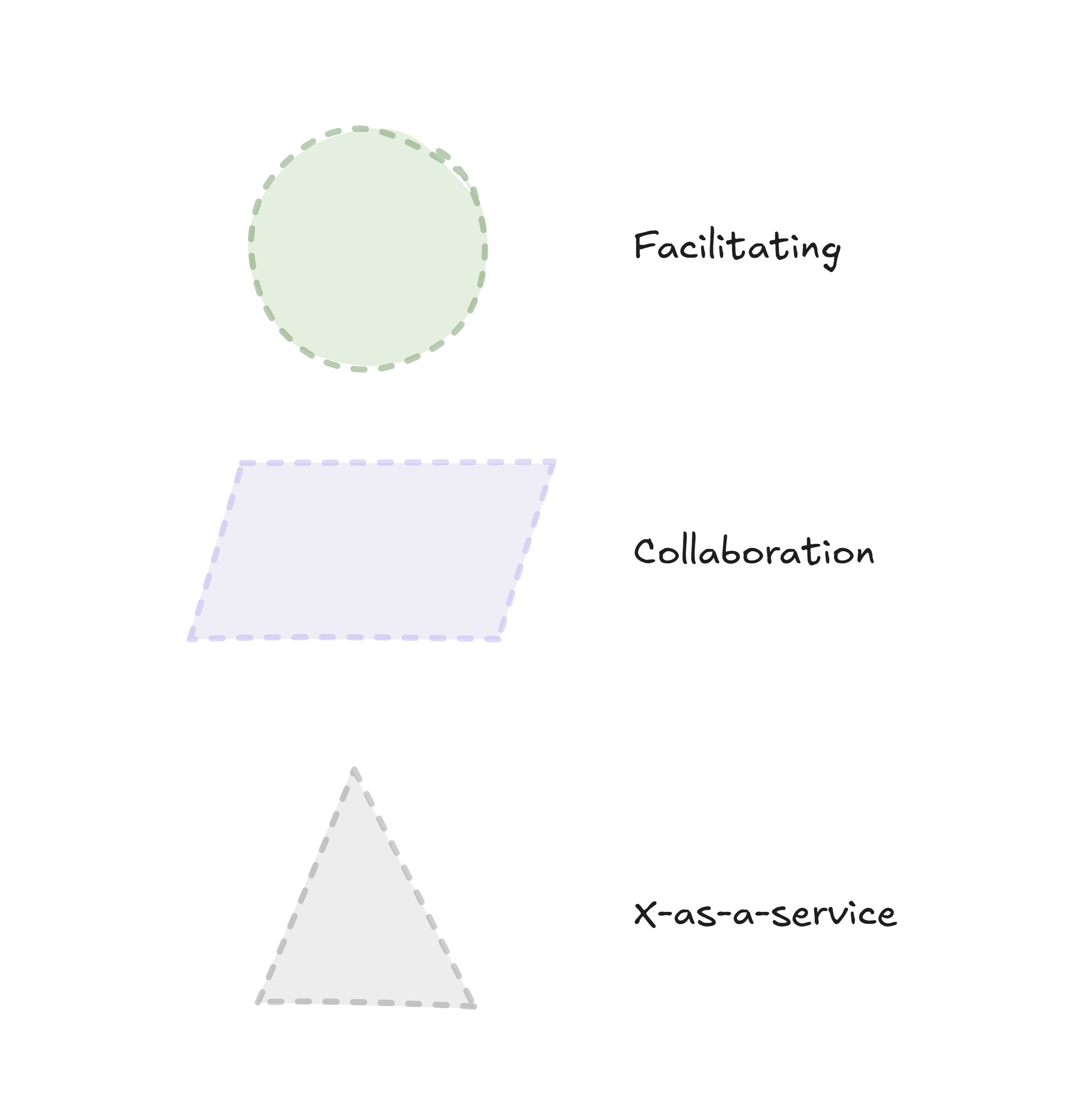
Collaboration: Short-term, intensive work between teams to solve a specific problem or deliver a shared outcome.
Facilitating: One team helps another gain new skills or capabilities.
X-as-a-Service: One team provides services or resources to be consumed by another in a self-service manner, such as platform tools or APIs.
How it fits with User Needs Mapping
Before you can design effective team types, boundaries, or interactions, you need clarity about who your users are, what they need, and the capabilities required to meet those needs. UNM creates that shared picture. It shows how work really flows today, where responsibilities are blurred or duplicated, and where cognitive load is exceeding safe limits.
This makes the later Team Topologies decisions — stream-alignment, enabling support, platform design, and interaction modes — far more grounded and intentional. In practice, UNM becomes the essential first step: aligning teams around real needs before shaping the structures that support fast flow.
Learn more about the Four Team Types
Learn more about the Three Interaction Modes